Glass vs Plastic vs Aluminium: The Complete Cosmetic Packaging Guide
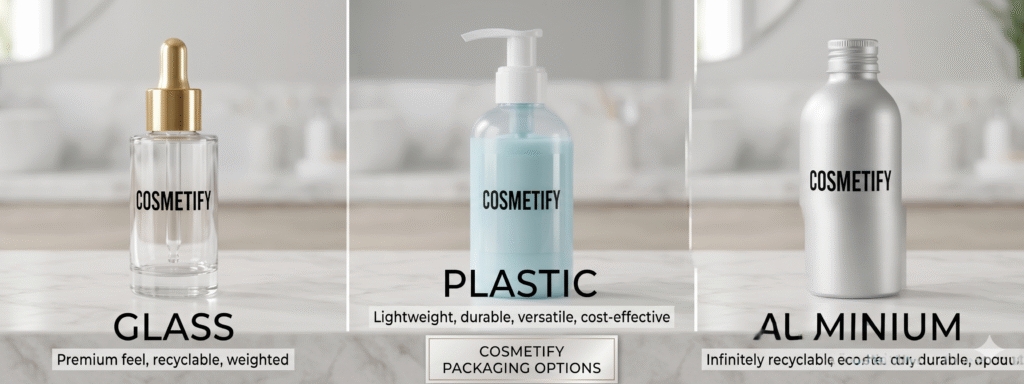
Packaging is much more than just a container for your product. It plays an important role in protecting the formulation, creating a strong first impression, and communicating what your brand stands for. For cosmetic brands, choosing the right packaging material is a key decision that can influence product quality, customer perception, shipping expenses, and sustainability goals.
Glass, plastic, and aluminium are among the most commonly used packaging materials in the beauty industry, and each comes with its own advantages and limitations. The right choice depends on factors such as your product formulation, target audience, budget, branding strategy, and environmental priorities.
In this guide, we’ll look at the strengths and drawbacks of each material, including compatibility with different formulations, durability, recyclability, and current industry trends. By understanding these factors, you can choose packaging that supports both your product and your brand’s long-term vision.
The global cosmetic packaging market continues to grow, driven by increasing demand for sustainable, premium, and innovative packaging solutions. Industry projections indicate steady expansion through 2033, with the current material mix looking roughly like this:
Current Material Distribution:
- Plastic — ~60% of all cosmetic packaging
- Glass — ~20%, particularly popular in premium skincare and luxury beauty products
- Metal (Aluminium) — ~10%, with adoption increasing across multiple categories
- Other (paper, bamboo, bio-based materials) — ~10%
Sustainability remains one of the biggest factors influencing packaging decisions. More consumers are actively looking for recyclable and environmentally responsible options, prompting brands to rethink traditional packaging choices.
Aluminium, in particular, has emerged as a strong alternative to plastic, gaining popularity among both established and emerging beauty brands due to its recyclability, durability, and premium appearance.
Key Packaging Trends in 2026:
- Greater use of recyclable materials
- Growing adoption of refillable packaging formats
- Lightweight packaging designs
- Reduced material consumption and waste
- Packaging solutions that balance sustainability, protection, and brand appeal
1. Glass Packaging
What It Is and Where It Works Best
Glass has been a trusted packaging material for centuries and remains a preferred choice in the cosmetic industry today. It is widely used for products that require strong protection from external factors while also delivering a premium look and feel.
Common applications include serums, facial oils, perfumes, essential oils, vitamin C treatments, retinol products, and other high-performance skincare formulations.
Best suited for:
- Anti-ageing serums
- Perfumes and fragrances
- Essential oils
- Hair oils
- Premium skincare creams
- Active ingredient formulations in dropper bottles
- Why Many Brands Choose Glass
One of the biggest advantages of glass is that it does not react with cosmetic formulations. Unlike some packaging materials, it does not absorb ingredients or affect the product over time. This makes it particularly suitable for formulas containing sensitive or high-value ingredients such as retinol, vitamin C, peptides, and botanical extracts.
Tinted glass can provide additional protection. Amber glass helps reduce exposure to UV light, while darker options such as blue or violet glass are often used for formulations that are sensitive to light. Many brands also pair glass containers with airless pumps or dispensers to help minimise exposure to air and maintain product stability throughout use.
Consumer Appeal and Brand Positioning
Glass is often associated with quality, luxury, and sophistication. Its weight and appearance create a premium experience that many consumers associate with high-end skincare and fragrance products.
Another advantage is transparency. Clear glass allows customers to see the product’s colour and texture, helping build trust and showcase the formulation itself.
From a branding perspective, glass offers plenty of customisation options, including frosted finishes, embossing, metallic accents, custom shapes, and decorative coatings. These features help brands create distinctive packaging that stands out on retail shelves and online.
Sustainability Considerations
Glass is one of the most recyclable packaging materials available. It can be recycled repeatedly without losing quality, making it an attractive option for brands looking to improve their sustainability efforts.
However, glass is not without challenges. It is heavier than plastic or aluminium, which can increase transportation costs and carbon emissions. It is also more fragile, requiring additional care during shipping and handling.
On the positive side, glass containers are often reused by consumers before entering the recycling stream, extending their useful life beyond the original product.
Cost Considerations
Among the major cosmetic packaging materials, glass is generally the most expensive. Manufacturing, transportation, and handling costs are typically higher due to its weight and fragility.
For premium skincare, luxury beauty products, fragrances, and gift sets, the added cost is often justified by the enhanced consumer perception and product presentation. For mass-market or high-volume products, brands may need to balance these benefits against the higher overall packaging expense.
Glass: Quick Summary
| Factor | Rating |
|---|---|
| Formula protection | ⭐⭐⭐⭐⭐ Excellent |
| Brand/luxury perception | ⭐⭐⭐⭐⭐ Best-in-class |
| Sustainability (end-of-life) | ⭐⭐⭐⭐ Strong |
| Cost | ⭐⭐ High |
| Weight/shipping | ⭐⭐ Heavy |
| Fragility risk | ⭐⭐ Breakage risk |
| Design flexibility | ⭐⭐⭐⭐ High |
2. Plastic Packaging
What It Is and Where It Works Best
Plastic is the most widely used packaging material in the cosmetics industry. Its popularity comes from a combination of affordability, durability, lightweight handling, and design flexibility. It is especially well suited for products that are used frequently, sold in larger volumes, or require convenient, travel-friendly packaging.
Best suited for:
- Shampoos and conditioners
- Body lotions
- Face washes and cleansers
- Sunscreens and SPF moisturisers
- Travel-size products
- Kids’ personal care products
- Understanding Different Types of Plastic
Not all plastic packaging performs the same way. Different materials offer different levels of durability, transparency, chemical resistance, and recyclability.
PET (Polyethylene Terephthalate)
Often used for bottles and dispensers, PET offers good clarity and is widely recyclable.
HDPE (High-Density Polyethylene)
Known for its strength and chemical resistance, HDPE is commonly used for cleansers, lotions, and thicker formulations.
PP (Polypropylene)
A durable, heat-resistant material frequently used for jars, lids, caps, and closures.
PETG
A premium-grade plastic that provides a clear, high-end appearance while remaining lightweight and impact-resistant.
Acrylic
Popular for luxury-looking jars and containers, acrylic offers a glass-like appearance without the risk of breakage.
When selecting plastic packaging, compatibility with the formulation is important. Certain ingredients, particularly essential oils, fragrances, and oil-based formulations, may interact differently with specific plastic materials. Choosing the right packaging material helps maintain product stability and performance throughout its shelf life.
Brand Perception
Plastic is often associated with convenience, practicality, and affordability. For everyday personal care products and mass-market ranges, this can be a significant advantage.
Higher-grade plastics such as PETG and acrylic have helped bridge the gap between affordability and premium aesthetics. Many beauty brands use these materials to create packaging that looks sophisticated while remaining lightweight and durable.
It is also common for brands to combine materials within a product range—for example, using glass packaging for hero products and premium plastics for complementary items.
Sustainability Considerations
Sustainability remains one of the biggest challenges and opportunities for plastic packaging. Traditional plastic is typically produced from fossil-fuel-based raw materials, which has raised environmental concerns across the industry.
To address this, many brands are incorporating Post-Consumer Recycled (PCR) plastic into their packaging. PCR materials help reduce the need for virgin plastic and support a more circular approach to packaging production.
The recyclability of plastic varies depending on the material type and local recycling infrastructure. While some plastics are widely accepted in recycling systems, others are more difficult to process. As a result, brands are increasingly focusing on packaging designs that improve recyclability and reduce unnecessary material usage.
In addition, lightweight plastic packaging can help lower transportation emissions by reducing shipping weight compared to heavier materials such as glass.
Cost Considerations
Plastic is generally the most cost-effective packaging option available to cosmetic brands. Lower production costs, reduced shipping expenses, and greater manufacturing flexibility make it an attractive choice for startups, high-volume products, and budget-conscious product lines.
For brands looking to balance functionality, affordability, and design flexibility, plastic remains one of the most practical packaging solutions available.
Plastic: Quick Summary
| Factor | Rating |
|---|---|
| Formula protection | ⭐⭐⭐ Varies by type |
| Brand/luxury perception | ⭐⭐ Limited (standard); ⭐⭐⭐⭐ (premium grades) |
| Sustainability (end-of-life) | ⭐⭐ Lowest recycling rate |
| Cost | ⭐⭐⭐⭐⭐ Most affordable |
| Weight/shipping | ⭐⭐⭐⭐⭐ Lightest |
| Fragility risk | ⭐⭐⭐⭐⭐ Shatter-proof |
| Design flexibility | ⭐⭐⭐⭐⭐ Maximum flexibility |
3. Aluminium Packaging
What It Is and Where It Works Best
Aluminium has become an increasingly popular packaging choice in the beauty and personal care industry. As brands look for alternatives to traditional plastic packaging while maintaining durability and convenience, aluminium is being adopted across skincare, haircare, deodorants, and refillable product ranges.
Its combination of strength, light weight, and recyclability makes it suitable for both everyday products and premium collections.
Best suited for:
- Deodorants
- Lip balms
- Eye creams
- Travel-size products
- Solid and concentrated formulations
- Refillable lotion tubes
- Face mists
- Candles and lifestyle products
Performance and Product Protection
One of aluminium’s biggest advantages is its ability to protect products from external factors. It creates an effective barrier against light, moisture, and air, helping maintain the stability of sensitive formulations.
Its lightweight yet durable structure also makes it practical for transportation and handling. In addition, aluminium performs well across a variety of cosmetic manufacturing processes and packaging formats.
Most cosmetic-grade aluminium packaging includes an internal protective coating to prevent direct contact between the product and the metal. When selecting aluminium packaging, it is important to ensure that the internal lining is compatible with the intended formulation and meets relevant safety standards.
Brand Perception
Aluminium offers a modern, clean, and sophisticated appearance that appeals to many contemporary beauty brands. Its minimalist aesthetic works particularly well for skincare, wellness, personal care, and gender-neutral product lines.
Depending on the finish, aluminium can support a wide range of brand identities. Matte and brushed finishes create a premium, contemporary look, while tins and metal containers can also evoke a more classic or heritage-inspired feel.
Many brands are also using aluminium in refillable packaging systems because it is durable enough to withstand repeated use while maintaining its appearance over time.
Sustainability Considerations
Aluminium is widely recognised as one of the most recyclable packaging materials available. It can be recycled repeatedly without significant loss of quality, helping support circular packaging initiatives and reducing dependence on virgin raw materials.
Another advantage is its lightweight nature. Compared to heavier materials such as glass, aluminium can reduce transportation weight and improve shipping efficiency across supply chains.
That said, producing new aluminium requires substantial energy and resources. The environmental benefits are strongest when aluminium packaging is effectively collected and recycled after use.
As consumer interest in sustainable packaging continues to grow, aluminium is becoming an increasingly attractive option for brands looking to balance performance, aesthetics, and environmental responsibility.
Cost Considerations
From a cost perspective, aluminium generally sits between plastic and glass. Standard tubes, tins, and containers can be a practical option for many product categories, while premium finishes and custom designs may increase costs.
For brands seeking a packaging material that offers a premium appearance, strong product protection, and strong recyclability credentials, aluminium often represents a balanced middle ground between affordability and luxury.
Aluminium: Quick Summary
| Factor | Rating |
|---|---|
| Formula protection (barrier) | ⭐⭐⭐⭐⭐ Excellent (with liner) |
| Brand/luxury perception | ⭐⭐⭐⭐ Strong & growing |
| Sustainability (end-of-life) | ⭐⭐⭐⭐⭐ Highest recycling rate |
| Cost | ⭐⭐⭐ Mid-range |
| Weight/shipping | ⭐⭐⭐⭐⭐ Very lightweight |
| Fragility risk | ⭐⭐⭐⭐ Durable (dents but doesn’t shatter) |
| Design flexibility | ⭐⭐⭐⭐ Good |
Head-to-Head Comparison: The Full Picture
| Attribute | Glass | Plastic | Aluminium |
|---|---|---|---|
| Chemical inertness | Best — zero leaching | Variable — grade-dependent | Good (with liner) |
| UV/light protection | Excellent (coloured glass) | Poor (unless opaque) | Complete |
| O₂/moisture barrier | Very good | Variable | Complete |
| Luxury perception | Highest | Low–Medium | Medium–High |
| Weight | Heaviest | Lightest | Light |
| Breakage | Fragile | Shatter-proof | Dents, doesn’t shatter |
| Recyclability | Infinite, no quality loss | Degrades with cycles | Infinite, minimal loss |
| Actual recycling rate | 39.6% | 20% | 43% |
| Carbon footprint (production) | High (energy-intensive) | Medium | Medium |
| Refillability | Good | Poor | Excellent |
| Best for | Serums, perfume, luxury skincare | Daily-use, mass-market, travel | Deodorant, tubes, refillables |
How to Choose the Right Packaging Material
There is no single packaging material that works best for every cosmetic product. The right choice depends on your formulation, target audience, brand positioning, budget, and sustainability goals.
Choose Glass When:
- Your formulation contains sensitive or highly active ingredients such as retinol, vitamin C, or essential oils.
- You are targeting the premium or luxury beauty segment.
- The product is a flagship SKU, gift set, or hero product.
- Product stability and ingredient protection are top priorities.
- Packaging plays a major role in creating a premium customer experience.
- Shipping distances are manageable and transportation costs are less of a concern.
Choose Plastic When:
- Cost efficiency is a key consideration.
- The product is used frequently and sold in higher volumes.
- Lightweight and durable packaging is important.
- The product is intended for travel, gym use, or family-friendly applications.
- You are launching a new brand and need to manage packaging costs carefully.
- You plan to incorporate recyclable or post-consumer recycled (PCR) materials into your packaging strategy.
Choose Aluminium When:
- You want a durable alternative to traditional plastic packaging.
- You are developing refillable products or reusable packaging systems.
- The product is packaged in tubes, tins, mists, or solid formats.
- Your brand aesthetic is modern, minimalist, or sustainability-focused.
- Environmental responsibility is an important part of your brand story.
- You need strong protection from light, moisture, and air without adding significant weight.
Packaging Trends Shaping the Industry
Refillable Packaging Continues to Grow
More brands are investing in refillable packaging systems as consumers look for ways to reduce waste. Glass and aluminium are both being widely used in refillable formats due to their durability and long-term usability.
Hybrid Packaging Solutions
Many brands are combining multiple materials to balance sustainability, functionality, and customer experience. A common approach is using a premium outer container made from glass or aluminium with a replaceable inner cartridge, helping reduce material consumption over time.
Smart and Connected Packaging
Packaging is becoming more interactive through QR codes, digital product passports, and NFC-enabled experiences. These technologies allow brands to share ingredient information, product instructions, recycling guidance, authenticity verification, and other useful content directly with consumers.
Greater Demand for Transparency
Consumers increasingly expect brands to provide clear information about sourcing, recyclability, and environmental impact. As a result, packaging is becoming an important tool for communicating sustainability initiatives and building trust.
New Sustainable Materials
Alternative materials derived from plant-based and renewable resources continue to attract attention across the industry. While many are still in the early stages of commercial adoption, they represent an area of ongoing innovation that could influence the future of cosmetic packaging.
A Balanced View of Sustainability
When discussing sustainable packaging, it is important to recognise that no single material is the perfect solution for every application.
- Aluminium offers excellent recyclability and can be reused and recycled multiple times.
- Glass is highly recyclable, chemically stable, and well suited for premium products requiring strong formula protection.
- Plastic, particularly when recycled content is incorporated, can remain a practical option due to its lightweight nature and lower transportation impact.
The most sustainable choice often depends on the entire product lifecycle, including manufacturing, transportation, consumer use, and end-of-life disposal. Factors such as local recycling infrastructure, refill systems, product compatibility, and shipping distances all play an important role.
Final Thoughts
Glass, plastic, and aluminium each offer unique advantages, and most successful cosmetic brands use a combination of materials rather than relying on a single solution.
The key is to match the packaging material to the specific needs of the product. A luxury serum may benefit from glass, a daily-use shampoo may be better suited to plastic, and a refillable personal care product may perform best in aluminium.
By considering product performance, customer expectations, cost, and sustainability together, brands can build packaging strategies that support both business goals and long-term consumer trust.
Frequently Asked Questions
Q1. Which packaging material is best for cosmetics?
There isn’t a single packaging material that’s right for every cosmetic product. The best choice depends on your formulation, target audience, budget, sustainability goals, and brand positioning. Glass is often preferred for premium skincare and products containing sensitive active ingredients. Plastic remains a practical option for everyday, high-volume products, while aluminium is becoming increasingly popular for refillable and sustainability-focused packaging solutions.
Q2. Which packaging material is used most in the cosmetics industry?
Plastic remains the most widely used cosmetic packaging material because it is lightweight, versatile, durable, and cost-effective. It is commonly used for shampoos, body lotions, cleansers, and other daily-use products.
Q3. Does packaging affect product quality?
Yes. Packaging plays an important role in protecting cosmetic formulations from light, air, moisture, and contamination. Choosing packaging that is compatible with the formulation helps maintain product stability and performance throughout its shelf life.
Q4. Why do luxury skincare brands often choose glass packaging?
Glass is widely associated with quality, sophistication, and premium product experiences. It also offers excellent compatibility with many cosmetic formulations and helps preserve ingredient integrity.
Q5. Why are some cosmetic products packaged in amber or coloured glass?
Coloured glass helps protect formulations from light exposure. Amber glass is commonly used because it helps reduce UV exposure while maintaining an attractive appearance.
Q6. Is glass environmentally friendly?
Glass is highly recyclable and can be recycled multiple times without significant loss of quality. However, its weight can increase transportation-related environmental impacts.
Q7. What are the drawbacks of glass packaging?
The primary disadvantages of glass are its weight, higher cost, and potential for breakage, which can increase manufacturing and shipping expenses.
Q8. Is plastic packaging safe for cosmetic products?
Yes. Materials such as PET, HDPE, and PP are widely used because they offer durability, stability, and compatibility with many cosmetic formulations.
Q9. What is PCR plastic?
PCR stands for Post-Consumer Recycled plastic. It is made from plastic that has already been used, collected, and recycled for reuse in new packaging.
Q10. Why is plastic recycling challenging?
Plastic recycling depends on local infrastructure, sorting systems, consumer participation, and the type of plastic being used.
Q11. Can plastic packaging still look premium?
Absolutely. Premium plastics such as PETG and acrylic can deliver a luxury appearance while remaining lightweight and durable.
Q12. Why are more beauty brands using aluminium packaging?
Aluminium combines durability, recyclability, and a premium appearance, making it ideal for refillable systems and sustainability-focused brands.
Q13. Is aluminium safe for cosmetic formulations?
Yes. Cosmetic-grade aluminium packaging includes a protective internal lining that prevents direct contact between the formula and the metal.
Q14. Which is more sustainable: glass or aluminium?
Both offer sustainability benefits. The better choice depends on the product, transportation requirements, refill potential, and local recycling infrastructure.
Q15. What products work well in aluminium packaging?
Aluminium is commonly used for deodorants, lip balms, face mists, lotion tubes, solid beauty products, and refillable packaging systems.
Q16. What is the most sustainable packaging material?
There is no universal answer. Sustainability depends on sourcing, manufacturing, transportation, recyclability, and end-of-life management.
Q17. What is refillable packaging?
Refillable packaging allows consumers to keep the primary container and replace only the inner product component when needed.
Q18. How does packaging affect shipping costs?
Heavier materials such as glass increase transportation costs, while plastic and aluminium are lighter and generally more cost-effective to ship.
Q19. Can different packaging materials be used within the same product range?
Yes. Many brands use different materials for different products while maintaining a consistent visual identity across their product range.
Q20. What packaging trends are shaping the cosmetics industry?
Major trends include refillable packaging, recycled materials, smart packaging technologies, simplified packaging structures, and alternative sustainable materials.